What is a Screwworm?
Reading Time: 9 minutes
by Heather Smith Thomas
What is a Screwworm? Learn about where it came from, how it got here, the Key deer screwworm of the Florida Keys, screwworm treatment and fly eradication programs.
The New World screwworm (NWS), Cochliomyia hominivorax, has been in the news a lot in recent months. It became bigger news on June 3 when the USDA-APHIS (Animal and Plant Health Inspection Service) confirmed the finding of NWS in Zavala County, Texas. The affected animal was a 3-week-old calf and screwworm larvae were identified in its umbilical area.
“Protecting our livestock industry is a national security issue of utmost importance and USDA is wasting no time taking action,” Dudley Hoskins, Under Secretary for Marketing and Regulatory Programs told news media. “USDA invested heavily in the tools needed to eliminate NWS ever since cases increased in Central America and Mexico. The U.S. has defeated this pest before, and we will do it again,” he said. USDA and Texas officials are taking action to contain and eradicate this threat.
Many people are wondering if NWS is something they need to worry about with their own livestock. It’s important to know the facts.
What is a Screwworm?
This parasitic fly lays its eggs in fresh wounds, in living tissue of warm-blooded animals. The larvae (maggots) feed on the host’s flesh, creating deeper wounds —eventually, if untreated. NWS affects livestock, pets, wildlife, and less commonly, people and birds. Unlike contagious diseases, screwworm does not spread directly from animal to animal; female flies lay eggs in wounds or body openings.
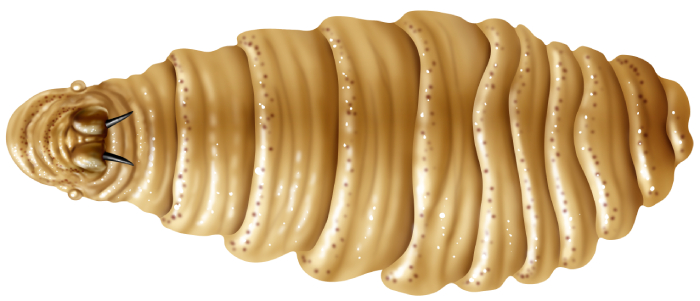
The name “screwworm” is often thought to refer to the feeding behavior of these maggots as they burrow (screw) into the wound, but refers to the spines that protrude from the body and wrap around in a spiral like a screw. Mature larvae can reach 2/3 of an inch in length. Identification of larvae is based largely on the presence or absence of dual internal breathing tubes. The maggots cause extensive damage, tearing at the hosts’ tissue with sharp mouth hooks. The wound becomes larger and deeper as more eggs hatch and more larvae feed on the living tissue.
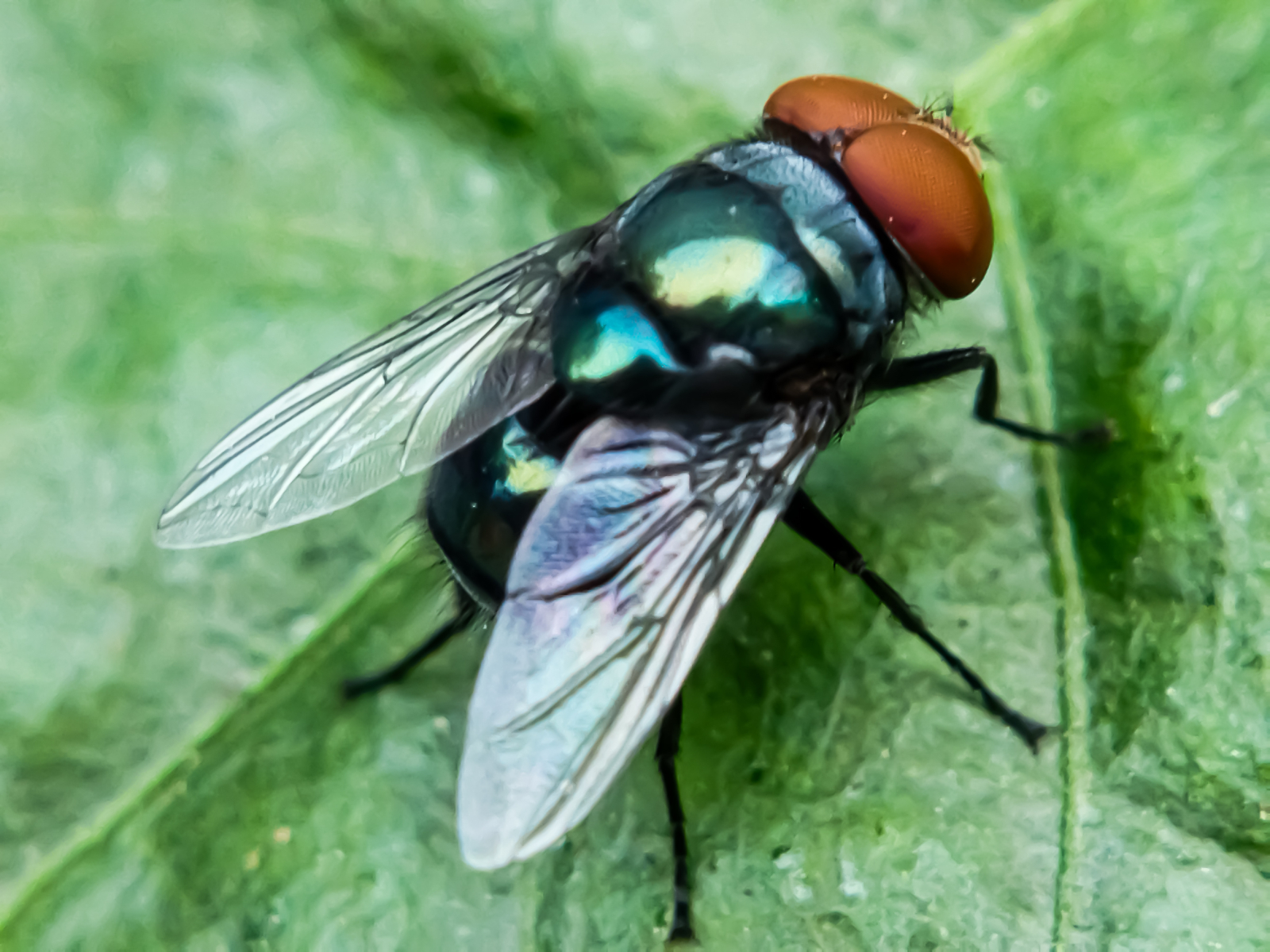
Adult flies are metallic blue blow flies with large orange eyes and three stripes that run down the top of the fly just behind the head. This fly resembles the closely related secondary screwworm, Cochliomyia macellaria, which is also a metallic blue blow fly with three stripes, but the stripes all begin at the same point behind the head. Adult secondary screwworm flies do not deposit eggs in living tissue — dead tissues after an injury has already occurred. Their maggots eat dead and dying tissue in old wounds, whereas the NWS lays eggs in any body opening and the maggots eat into living flesh.
Where Did the Screwworm Come From?
NWS infestations occur in Jamaica, Cuba, and all across South America. In 1923, these flies were seen north of the traditional containment barrier, the Darien Gap in Panama. Up until then, areas north of this tiny bridge between Central and South America had been free of the NWS for many years, thanks to use of sterile male flies to create a buffer zone on the Panama side.
The Darién Gap is a remote stretch of dense rainforest, swamps, and mountains on the border between Panama in Central America and Colombia in South America — about 30 to 50 miles wide and 60 to 100 miles long, creating an impenetrable break in the otherwise continuous Pan-American Highway.
The only thing that kept these flies from coming up into Central America was the buffer of sterile flies. Use of insecticides for screwworms is less effective than with other insect pests, partly due to their wide range of host animals and occurrence in wildlife.
New World Screwworm Was Here Before
NWS was eradicated in the U.S. in the 1960s but occasionally reemerges, most recently in Central America and Mexico. Two scientists started trying to do something about them in the mid-30s because of a catastrophic screwworm outbreak in Texas in 1933.
Screwworms were reported in Texas as far back as 1834. We know they were here prior to that, but no one was looking for them or taking pictures of them in those days. Dr. Raymond Bushland and Dr. Edward Knipling began studying these flies in the late 1930s, while working at the USDA Laboratory in Menard, Texas. At that time, the screwworm was decimating livestock herds across the American South. Meat and dairy supplies were affected all across Mexico, Central America, and South America.
The two scientists studied the flies’ mating habits and realized that if they could figure out how to make the males sterile, they could breed them out of existence. It took another 20 years before they could develop the process. Their work was interrupted by World War II, but they resumed their efforts in the early 1950s with successful tests on the screwworm population of Sanibel Island, Florida. The flies were nearly eradicated by using x-ray sterilized males.
In 1954, their Sterile Insect Technique (SIT) completely eradicated screwworms from the 176-square-mile island of Curaçao, off the coast of Venezuela. Screwworms were eliminated in seven weeks, saving domestic goat herds — the source of meat and milk for the island people.
Screwworm Eradication
It took about two years to eradicate screwworms from Florida and the Gulf states, using the sterile insect technique. Then a significant screwworm outbreak that had begun in the late 50s reached crisis level in 1960 in Texas. Working with the Texas and Southwestern cattle raisers, a group of cattle producers worked with USDA to bring the SIT eradication tool into the Southwest. They began the project in 1962 and by 1966 there were no more resident breeding populations of screwworm flies in Texas.
That didn’t mean there were no more screwworms in Texas; there just weren’t any stable populations. The stable populations were across the river in Mexico. Each spring, on favorable weather, the flies would move into Texas, create problems, and get pushed back into Mexico. People realized that as long as these flies were in Mexico, they were only a day or two from being in Texas. So, the U.S. made a commitment to eradicate screwworms from Mexico.
Even though they used to be here, they haven’t been here in a long time, so now screwworms are considered a foreign animal disease. They fall under the same sort of management strategy as something like foot and mouth disease or any other livestock disease from another country that we want to keep out.
Screwworm Fly Eradication
The NWS is controlled only through release of sterile males, the strategy called sterile insect technique (SIT). This approach, and regular surveillance and livestock inspections, has proven highly successful.
These flies reproduce rapidly. A female fly during her 7-to-10-day life can lay as many as 1,000 eggs. If one fly can reproduce itself a thousand-fold every couple weeks if left unchecked, the population grows.
Immediately after the case in Texas was discovered on June 3, USDA and Texas officials established a quarantine zone — a 12-mile buffer around the detection area — and movement control of livestock and pets. Diligent surveillance and targeted release of sterile male flies was accomplished with ground release in the area, in addition to 4 million sterile flies per week already being released aerially. USDA is investing in new sterile fly production facilities in Texas. Since female flies generally mate only once, those that pair with sterile males are unable to produce offspring.
Trapping NWS flies along the Texas border and just outside the SIT dispersal area has been stepped up, along with increased surveillance and management strategies in wildlife in the area. USDA’s National Veterinary Stockpile also stands ready to assist and to provide resources including treatments and equipment. USDA will continue to work with state departments of agriculture, animal health officials and livestock producers to mitigate economic impacts of restrictions as much as possible.
Continual monitoring and evaluation of all livestock and pets is important for herd and flock biosecurity and health. Animal owners should be alert for signs associated with infestation. These signs include foul-smelling, draining, or enlarging wounds with visible maggots and eggs in and around body openings, animals biting or licking at wounds, lesions in navels of newborns, and in ears, nose, genitalia, dehorning or branding sites. Other signs include lethargy or abnormal restlessness of discomfort. If you suspect an animal is infected with screwworm, contact your state animal health official or USDA area veterinarian immediately to prevent further spread and protect animal health. Report any mammals or birds (wild or domestic) with signs of irritated behavior or head shaking, smell of decay, or evidence of fly strike and/or the presence of maggots in wounds. While not common in people, if you notice a suspicious lesion on your body or suspect you may have contracted screwworm, seek immediate medical attention.
Screwworm Treatment for Animals Affected
Livestock producers in North America have not had to treat animals for NWS in 40 years but there are several treatment strategies — which should be used in consultation with a veterinarian. Preventive measures include keeping flies from laying eggs in wounds, treating wounds promptly and keeping them clean while they heal. If maggots have already hatched in a wound, topical larvicides such as coumaphos or permethrin could be used, along with removal of larvae.
There are also some new pharmaceuticals. One is a new product from Merck, called Exzolt® Cattle-CA1. This conditionally approved product has been given the green light by USDA in the fight against both NWS and cattle fever tick. Conditionally approved products are drugs the FDA allows to be legally marketed and prescribed before full effectiveness studies are completed. They have been proven safe and only require a “reasonable expectation” of effectiveness.
This drug has been used in Australia and Brazil and now has a conditional label in the U.S. and requires a prescription. This is a pour-on product administered along the animal’s back, from withers to the base of the tail.
Jason Sawyer Comments November 2025
Jason Sawyer, Chief Scientific Officer with East Foundation (an organization that promotes the advancement of land stewardship through ranching, science, and education), presented a New World Screw Worm Update at a symposium on ranch management in Texas in November 2025.
“In Texas we’ve been paying close attention to this issue, because if screwworms were ever to escape Panama, and make their way through Central America and Mexico, guess who’s getting them first? The NWS fly and the old-world screwworm fly are the same, as far as I know; the only difference is one lives in the western hemisphere and one in the eastern hemisphere. We have other blowflies native to this area, and the NWS fly is also native; it just hasn’t been here in a long time,” he said.
“There’s a little neck of land at the southern tip of Panama called the Darien Gap. For many years there was a biological barrier of sterile flies at the Darien Gap and the screwworm population of the Western Hemisphere was basically held below it, in South America, until 2022,” said Sawyer.
“Then there was a leak and screwworms started to make their way up through Panama. They traveled rapidly once they escaped into Central America where there are large livestock and wildlife populations,” he said.
Then in November 2024, three screwworm cases were seen in Chiapas, Mexico, the southern part of Mexico. That got everybody’s attention; they were in an adjacent country. Over the next seven months, it went from three cases in Chiapas to more than 2,000 reported cases, and they’d migrated about 300 miles. By November 2025, there were more than 9,000 confirmed cases of screwworm infestations in Mexico. A couple cases occurred farther north, closer to the U.S. They were two separate incidents, in semi loads of calves delivered to feedlots. Those were detected and treated.
In Texas, the Parks and Wildlife Department is responsible for the native wildlife. Because wildlife are a significant host, this department must be involved, along with the Texas Department of Agriculture.
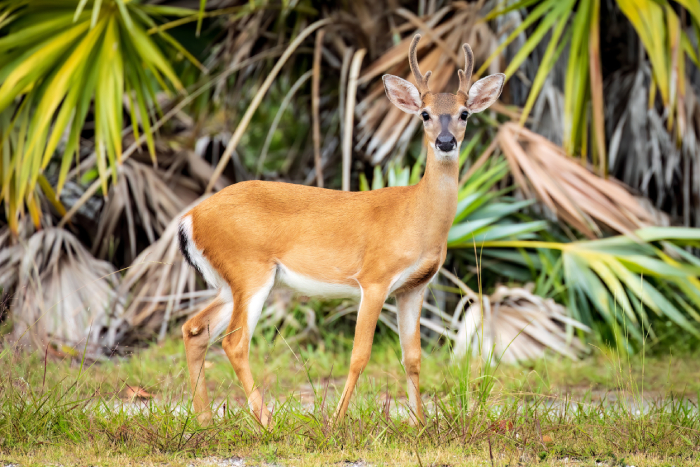
Key Deer Screwworm Florida Keys
One of USDA’s responsibilities is to draft a national plan — what to do when there’s a foreign animal disease outbreak. The plan for NWS was last updated in 2018 during a screwworm outbreak in the Florida Keys. The Key deer, an endangered species, were infected with screwworms, so sterile insects were deployed. “That infestation was eradicated fairly quickly, and USDA decided they should update that playbook, because we were slow on the draw. So, it was updated in 2018 and recently re-updated in the face of the current threat,” said Sawyer.
One of the things everyone has been interested in and waiting on the USDA to determine is the issue of quarantine. “If we have a foreign pest or animal disease enter the U.S., one of the key elements of response is movement control. Those two cases in northern Mexico were calves on a truck. It wasn’t like flies hustled themselves up there in a day and a half. Livestock movement has been the reason for rapid expansion from Central America into southern Mexico. Controlling livestock movement becomes an important piece of a response but also becomes an impediment to business,” Sawyer said.
“We are increasing observation and surveillance of both livestock and wildlife. USDA urged pharmaceutical manufacturers and FDA and EPA to consider conditional approvals and emergency use authorizations for treatments and preventives. The first one for livestock use was announced September 30th — Dectomax-CA1 — a conditionally approved version of Dectomax (doramectin) specifically for prevention and treatment of NWS larvae in livestock. The CA1 label means conditional approval, first one. USDA is trying to equip livestock producers and veterinarians with tools for prevention and treatment,” said Sawyer. There are drugs available in other parts of the world that aren’t available in the U.S.
Is Food Safe?
Screwworms don’t infest meat, fruits, vegetables, or other food sources. USDA’s Food Safety and Inspection Service (FSIS) ensures that the nation’s commercial supply of meat, poultry, and egg products is safe. Inspection personnel inspect all eligible animal species unless they’re exempt or covered by a state inspection program. Any evidence of screwworm infestation in an animal would be identified during these inspections, and any contaminated product from an affected animal wouldn’t be allowed to enter the food supply.
Heather Smith Thomas ranches with her husband near Salmon, Idaho, raising cattle and a few horses. She has a B.A. in English and history. She has raised and trained horses for 50 years and has been writing freelance articles and books nearly that long, publishing 20 books and more than 9,000 articles for horse and livestock publications. Find Heather online at HeatherSmithThomas.BlogSpot.com.
Originally published in the September/October 2026 issue of Countryside and Small Stock Journal and regularly vetted for accuracy.