What Is Schisandra? Schisandra Benefits & Growing Tips
Schisandra (Schisandra chinsensis) is a deciduous, perennial, woody vine native to the Far East, including Russia, China, Japan, and Korea.
Reading Time: 4 minutes
What is schisandra? Grow this medicinal berry to enjoy many schisandra benefits. Learn growing requirements, pruning, cultivars, and harvesting.
by Michael Brown
Schisandra (Schisandra chinsensis) is a deciduous, perennial, woody vine native to the Far East, including Russia, China, Japan, and Korea. It has a place in the garden or small farm where it can be used for its medicinal properties.
Schisandra Benefits
Schisandra is used in traditional Chinese medicine and is considered an adaptogen, which reduces mental and physical stress. It’s also used for increasing energy levels. The berries can be eaten raw or dried, and are also incorporated into teas and tinctures.
The website of the well-regarded Memorial Sloan Kettering Cancer Center has this to say about schisandra: “Scientists don’t know how schisandra works, but lab experiments have begun to identify some possible effects. Schisandra has antioxidant activity and appears to protect the liver and nervous system. Other animal studies suggest it may improve mental and physical functioning. Only a small number of studies have been conducted in humans and are too limited to draw any conclusions.”
Growing Requirements
Schisandra is generally an undemanding plant to grow, if you answer its basic needs. The plants grow best in climate zones 3 to 7. If you’re growing it in zone 8, it should be kept out of full sun, with southern exposures that may encourage early growth before danger of frost is over. Because schisandra does best in partial shade, it can be grown in areas that may not be suitable for other plants that require more direct sunlight. Rich, deep soil is preferred, and since it isn’t very drought-tolerant, make sure you apply ample compost or mulch to help preserve moisture. Schisandra is a vigorous climber. Make sure you have a sturdy support in place before planting. My schisandra easily topped its 8-foot support fencing within two years of planting.
Pruning
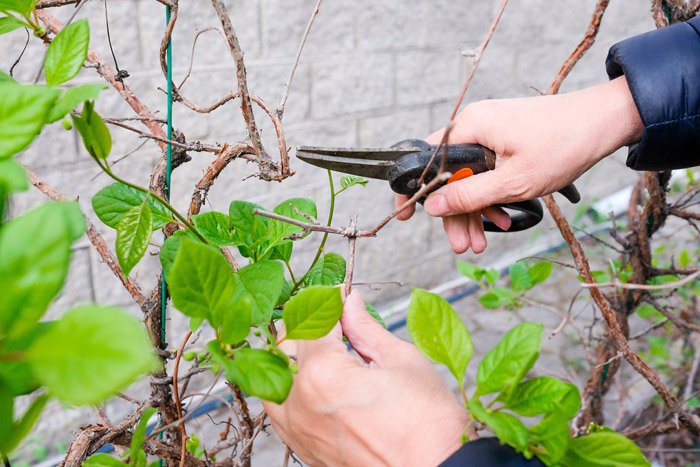
There’s very little written information about pruning schisandra. My experience is that it needs to be pruned in the fall to control height and make the plant more manageable.
Cultivars
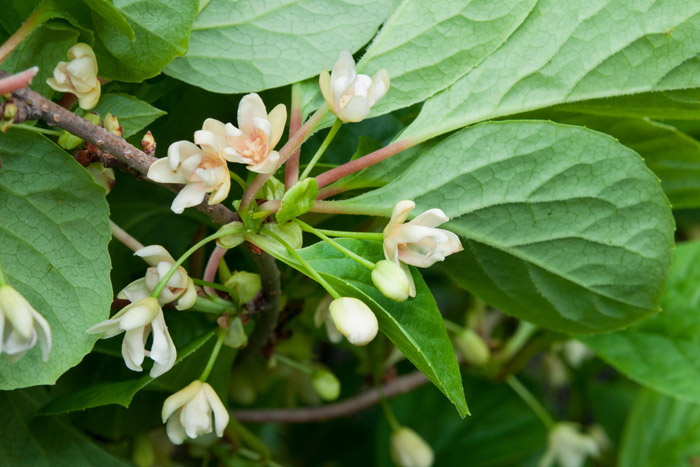
Online sources for schisandra describe the plant as dioecious (separate male and female plants) and monoecious (both male and female flowers on the same plant), so obviously there’s a bit of debate. All sources hedge their bets by suggesting planting multiple plants to increase fruit production. To avoid this confusion, use the ‘Eastern Prince’ cultivar, which is consistently advertised as self-fertile and has reliably produced fruit for me. If you want to maximize your schisandra potential, purchase some plants from multiple nurseries to trial which do best for you.
Propagation
Schisandra can be grown from seed, cuttings, or by layering. I personally have never propagated schisandra from seed. The literature isn’t entirely clear regarding the best method for sprouting seeds, though they all agree that germination can be erratic and slow.
To propagate a relatively small number of plants, layering is the easiest method. Lay down one of the long vines in late spring or early summer and cover part of it with soil. Anchor that spot with a rock so contact with the soil is continuous and, after a few weeks, check for new root growth. When you feel the roots are sufficiently developed, cut off the vine below the roots and replant it. At the same time, prune back the softer new growth so there’s less vegetation for the roots to support.
For a larger number of plants, consider taking cuttings in mid-summer. Take wood that has hardened to some extent, but isn’t woody. It should have some flexibility but not be too fragile. I like to keep three leaf nodes on the cutting and look for cuttings where the nodes aren’t overly spread out. Take cuttings from vines that you think you’d probably prune away later in the season. Schisandra can be an aggressive grower, so this shouldn’t be a problem. Place cuttings in light potting soil out of direct sunlight and keep them moist. When new top growth appears, start to check for root formation.
Harvesting
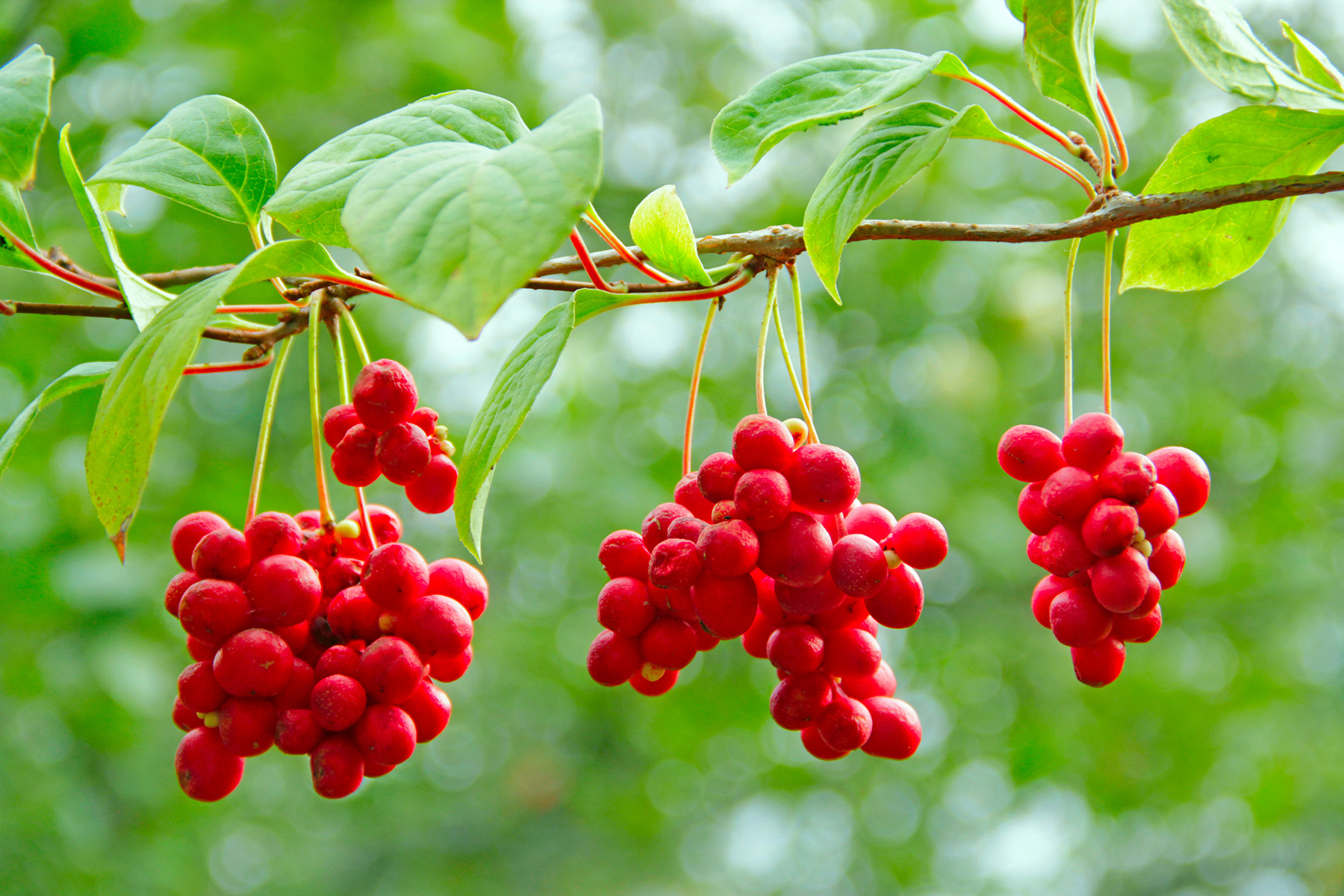
Schisandra berries ripen in late summer or early fall, depending on the location. The berries will hang in small clusters and should be a dark red color. After picking, they can be processed fresh, frozen, or dried. I found it easiest to rinse the clusters, separate the small berries, and freeze them.
Income from Schisandra
Schisandra can be grown for home use or to add to your farm income, although I wouldn’t consider it a main crop.
Schisandra can be propagated and sold as nursery plants. This would probably work best in conjunction with other medicinal perennials, such as aronia and elderberry, so you can tap into the market of people interested in health-related plants. The supply of schisandra plants is limited and the price for plants is high. This invites the opportunity of growing schisandra for resale, both mail order and for local sales. Local sales may need to be supported by some education, since most people aren’t familiar with schisandra.
The best market for modest crops of berries would be herbalists, or other end users who will use the berries to create value-added products. The strong point of these berries is their health attributes. Of course, everyone has their own preferences, but I’d say the berries are an acquired taste. I have yet to find someone who finds the taste of schisandra berries particularly appealing, so it wouldn’t be a dessert berry to serve as a snack.
Michael Brown is a retired school librarian and enjoys hanging out with his five grandchildren. He enjoys growing and learning about native species and teaching his next generation about the joys of growing food.
Originally published in the September/October 2025 issue of Countryside and Small Stock Journal and regularly vetted for accuracy.