Animal Friendships and Their Importance for the Herd
Long-Term Bonded Companions Help Animals Overcome Stress and Maintain a Peaceful, United Herd.
Reading Time: 6 minutes
Do animal friendships benefit the herd? Researchers have found that preferred partners are important for herd cohesion and animal health and welfare.
by Tamsin Cooper
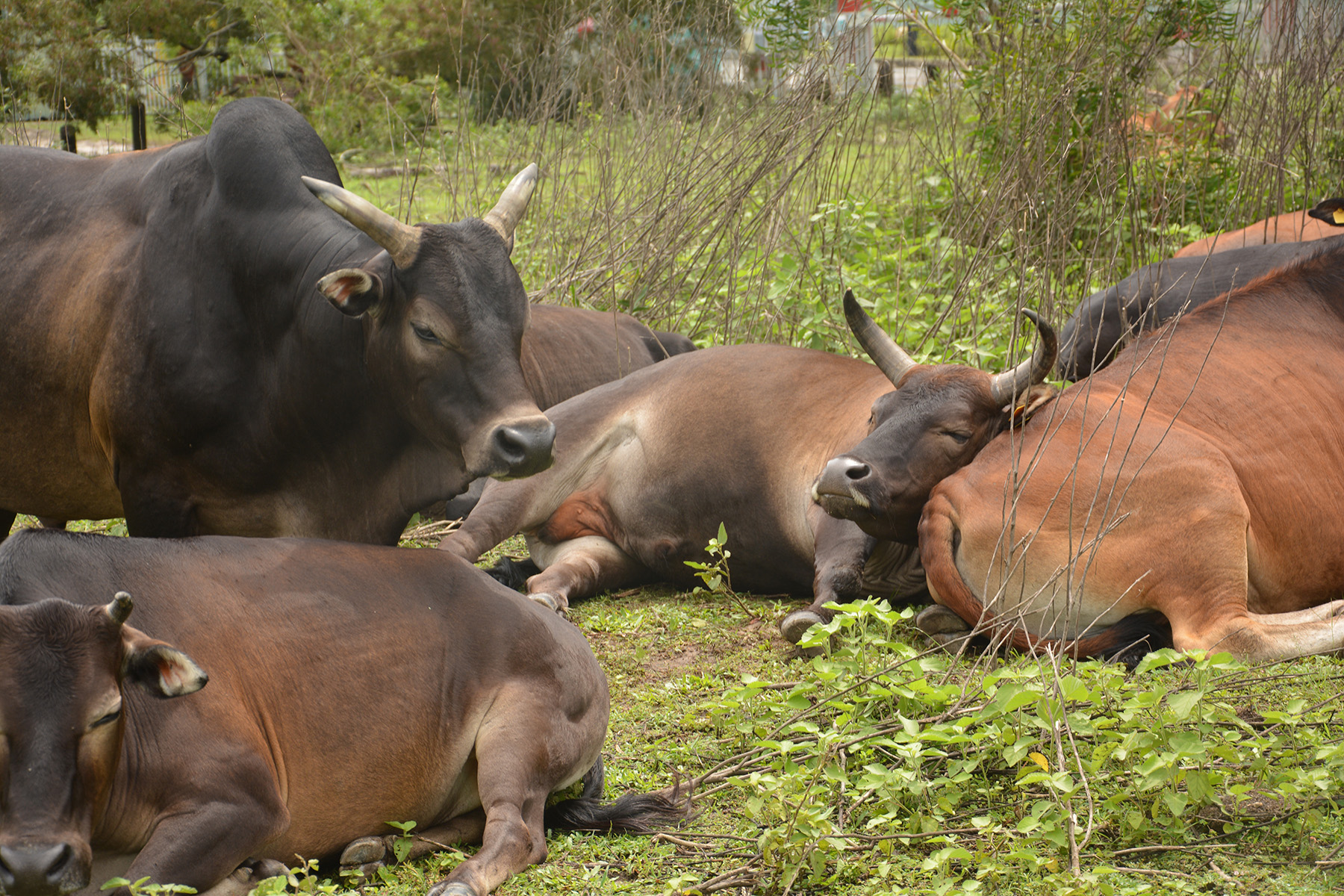
Recent research has revealed that domestic herd animals form long-term friendships that have survival and welfare benefits for herd members. Cattle, horses, goats, sheep, pigs, and water buffalo all show evidence of preference for individual members of their herd, as well as preferring familiar over unfamiliar individuals. However, frequent changes in farmed herd composition don’t allow such animal friendships to develop or disrupt existing bonds.
Evidence suggests that allowing such friendships to flourish will improve animal welfare and keep the herd calm. Bonded individuals move better together as a group as their activity is more greatly synchronized. They also cohabit more peacefully and help each other cope with stress.
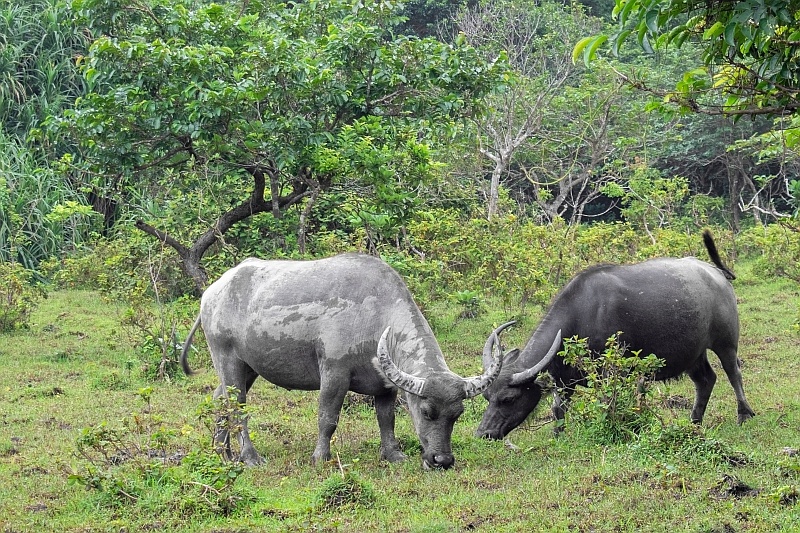
Researchers have been looking into the expression and value of animal friendships as well as their benefits. Observations of domestic cattle interactions have given conflicting answers to questions on social behavior. Consequently, researchers at the City University of Hong Kong turned to cattle herds living freely in the wild to study how cattle maintain friendship bonds. These studies have brought interesting results that help us recognize individual friendships between herd members and the benefits they provide to the herd.
The Benefits of Animal Friendship Bonds
Grazing animals benefit from the company of many others to help them avoid predators and find resources (food, water, etc.) that are unevenly spread across the land. However, group living invokes fighting over resources, which animals partly resolve by establishing a hierarchy that decides who has priority access. As hierarchy is aggressively maintained, it could tend to alienate herd members. The social glue is provided through kinship and friendship bonds. These relationships allow tolerance of bonded individuals, which helps them to maintain the cohesion of the group.
Tolerance of particular individuals within the herd gives an animal added benefits: he or she can spend time grazing without continual interruptions from competitors within the safety of the bonded sub-group. Protection from the sub-group can also improve the survival chances of their young.
There’s less stress when surrounded by tolerant companions. Tolerance permits close body contact, allowing friends to groom each other in places that are difficult for an animal to reach alone, mainly the head and neck. This helps to reduce external parasites.
The Bonding Effects of Mutual Grooming
Grooming produces hormones that calm the nerves and help animals cope with stressful situations. Grooming can also appease potential aggressors and stop aggression from escalating. In this way, grooming or other close contact can help animals to strengthen their social bonds. Gentle physical contact during play fights or after disputes over food has been seen in goats and pigs. In both species, reconciliation behavior after the fight appeared to calm the losing animal.
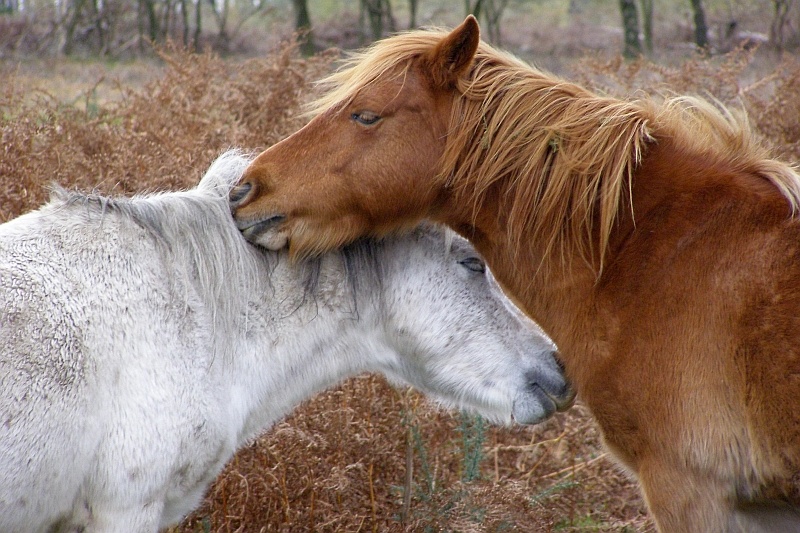
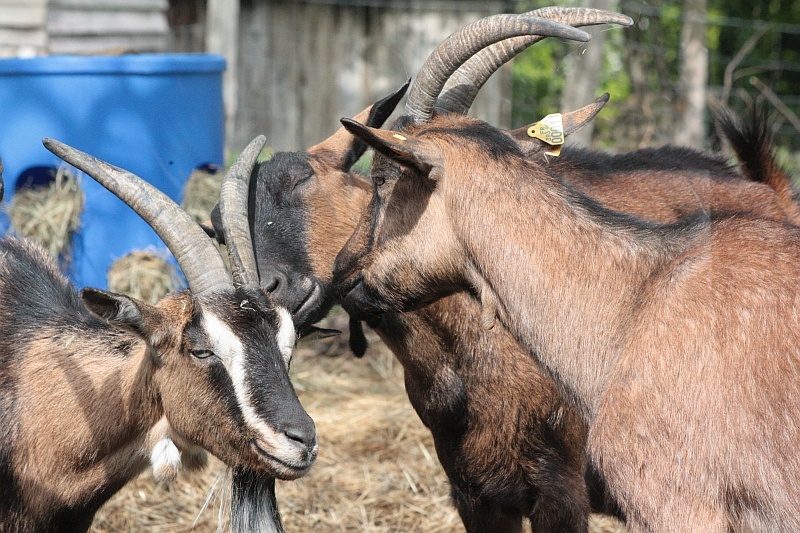
Whereas horses engage in full mutual grooming, other species, like cattle, may return the favor later. Goats sniff and rub around the head and neck and cattle lick mainly around the same area. These actions may have more of a social bonding function than an anti-parasitical one. In horses, mutual grooming appears to fulfill both roles of removing parasites and forming social bonds. Stallions form male coalitions with those individuals they mutually groom.
Friendships Among Cattle Living in the Wild
In 2022, City University of Hong Kong researchers studied an adult cattle herd of 22 males and 33 females living freely in Sai Kung East Country Park, Hong Kong. They found that the hierarchy was very stable and linear. Most members, including dominants, groomed other cattle. Every individual was seen to be groomed by another. Dominant females received more grooming than lower-ranking cows. However, they groomed others just as much as their lower-ranked female companions. Males preferred to groom females, but they groomed other males as well. For males, there appears to be a degree of courtship involved. However, the main purpose of this behavior is most likely to strengthen bonds between herd members.
Cattle in Managed Environments
On the farm, different patterns may emerge, and this may be because it takes time to form a friendship, and group membership is often changed on farms to suit husbandry purposes. To start with, males are normally absent. Frequently, dominant females groom among themselves and appear to have formed a clique. However, dominant females are normally older and have had more time to become familiar and form bonds. Younger animals may not have had such opportunities.
Aggression can be a problem in the absence of friendship bonds. During research studies, cows in smaller groups and in groups where humans provided extra feed were seen to display more aggression. In some instances, newly introduced cows perform most grooming, perhaps in an attempt to appease new companions. In others, cows prefer to groom their familiar companions.
Animal Friendships Based on Personality
Water buffalo don’t groom one another. Perhaps this behavior didn’t evolve as they have other means of parasite control. Their social bonds are maintained by staying close to their friends, sometimes with body contact. In the first study to examine which personal qualities determine which grazing animals become friends, City University of Hong Kong researchers studied 30 females roaming free on the Hong Kong island of Lantau. Preferred companions weren’t necessarily closest kin or animals of similar age or rank. These animals chose to spend their time with friends who had similar personality characteristics to their own.
Identifying Bonded Individuals
As we have seen, grazing animals are most likely to bond with animals they have been familiar with for a long time. Initially, this may be close kin and animals they are raised with. However, friendships can occur among animals of different ages or sexes, even those they aren’t related to, given enough time, and dependent on each animal’s personality.
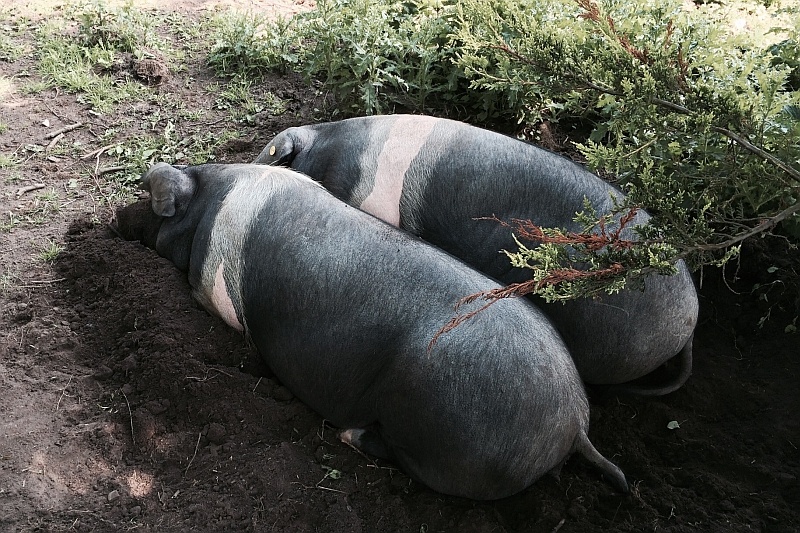
When animals touch each other gently, this is a sign that they may be forming or reinforcing a bond. However, it may initially be an attempt to calm aggression or communicate via an odor. It’s tempting to see it as a sign of contented animals: it may be so, but beware of assuming this. It can equally be a sign of animals attempting to reduce their stress. Conversely, if a sociable animal appears to withdraw or avoid companions, this can be an early sign of pain or a health issue.
Pairs or groups of individuals consistently seen in close and peaceful proximity can be reliably considered friends. This behavior can be observed in goats, sheep, pigs, equines, cows, and water buffalo, and probably other herding species.
Encouraging Animal Friendships on the Farm
Studies have shown that young animals removed from their mothers can fail to develop good social skills. This makes it difficult for them to integrate into the herd and maintain peaceful relationships. Although removal at birth is a current practice in dairy herds, there are studies into dam- and foster-raising that have promising results.
Wherever possible, it’s a huge benefit to farmers and their animals to keep groups stable so that bonds can form and allow the herd to become and remain peaceful, relaxed, and easier to manage.
Sources
- Bhattacharjee D., Flay K.J., and McElligott A.G., 2024. Personality homophily drives female friendships in a feral ungulate. IScience 27, 111419.
- Hodgson G.M.W., Flay K.J., Perroux T.A., Chan W.Y., and McElligott A.G., 2024. Sex and dominance status affect allogrooming in free-ranging feral cattle. Animal Behaviour 210, 275-287.
- Hodgson G.M.W., Flay K.J., Perroux T.A., and McElligott A.G., 2024. You Lick Me, I Like You: Understanding the function of allogrooming in ungulates. Mammal Review 54, 373-386.
- Hodgson G.M.W., Flay K.J., Perroux T.A., and McElligott A.G., (in press at the time of writing). Fighting and friendship: sociodemographic factors and provisioning affect feral cattle behaviour. Animal Behaviour.
Tamsin Cooper keeps goats and chickens on her smallholding in France, where she aspires to live as sustainably as possible. She follows the latest research on farm animal behavior and has mentored on animal welfare courses.
Originally published in the July/August 2025 issue of Countryside and Small Stock Journal and regularly vetted for accuracy.