Wood Tool Handles: Replacing Axe Handles
Hand tools range from axes, shovels, and files to specialized carving tools. Something they have in common is the handle, which may need to be replaced.
Reading Time: 6 minutes
Repair your own wooden tool handles at home. Learn step-by-step instructions for replacing axe handles, including selecting the wood and fitting the tool.
by Jenny Underwood
Hand tools are one of the “handiest” things on a homestead. They range from axes, shovels, and files to specialized carving tools. One thing they have in common is the handle. Most are wooden and, unfortunately, most will need to be replaced at some point. To some people, this is a sign that the whole tool must be replaced, but to the homesteader, it’s often a perfect opportunity to repair an otherwise serviceable item.
Replacing the Handle
You have a couple of options when replacing a handle: purchase or make it yourself. Replacement handles for larger tools such as axes or shovels are relatively easy to find, but for more unique pieces, you may be better off making your own.
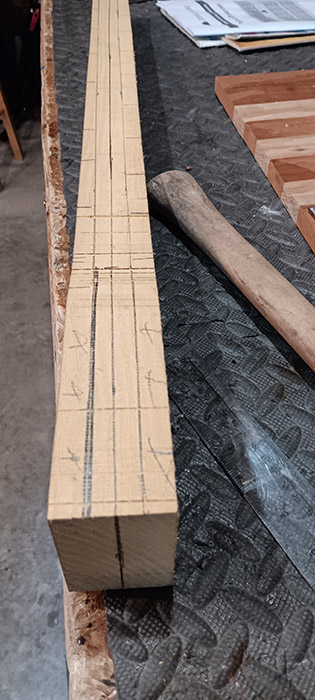
When you purchase one, it’ll most likely be made from hickory. Hickory is an excellent choice for a handle and is very durable, strong, and generally easy to manipulate with hot steam or dry heat (if you need to bend it). Measure your handle and make special note of the “eye” (where the handle fits into the tool) size. Draw a pattern and take it with you to the store, for best results.
Making your own will obviously take more time and skill, but you can choose from many different woods, which you can even harvest yourself. Any hardwood species is a good choice for a handle, but some of my favorites are hickory, Osage orange, mulberry, and locust.
Choosing the Wood
If you’re making your own, there are several important considerations. The wood must be very dry. If you’re air-drying the wood yourself, a good rule of thumb is for each inch of thickness, it should dry for a year. Wood from a lumber store is generally kiln-dried, so you should be fine if you choose to go that route and buy your wood.
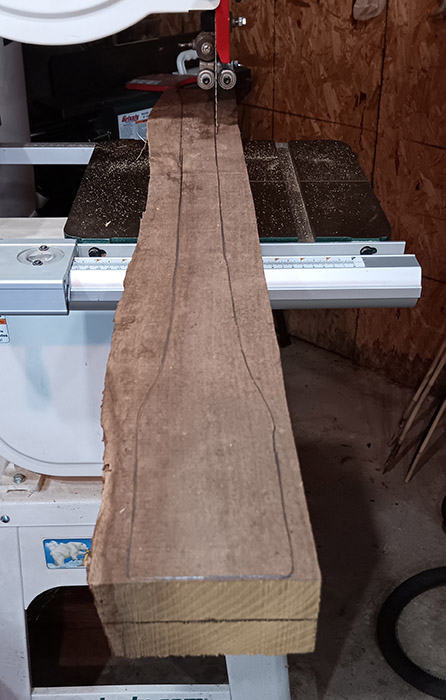
Make sure the grain is straight, running down through the handle. A grain that comes out to the sides, better known as grain runout, will generally make a weak handle and isn’t a good choice. The piece you choose should also be knot-free, as these will also weaken the handle.
Creating the Handle
Either choose a pattern, make one yourself, or use an old handle as a pattern for your new handle. Draw a straight line down the center of your wood and center your pattern piece on it.
Draw out the new handle pattern on the wood, leaving at least 1/16-inch of extra wood on both sides. You can always make the piece smaller, but you can’t add wood that’s already been removed. Leave an extra inch or so on each end of the handle, also; you can remove it later in the building process. It’s important to trace the eye pattern on the bottom of the handle, and leave a little extra wood on there as well.
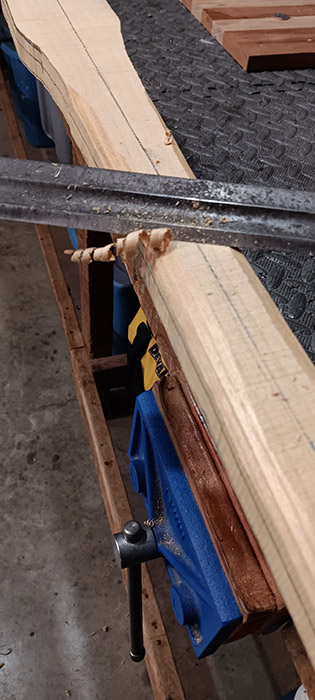
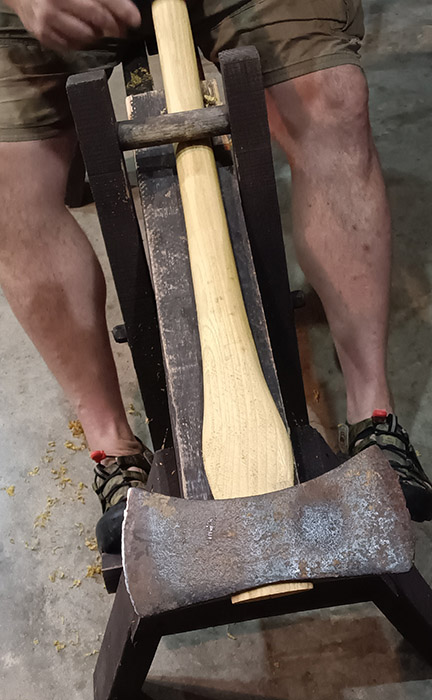
We prefer to use hand tools to finish the handle. A drawknife is used first, to get the basic shape. Next, we use a farrier’s rasp; then a #49 Nickolson’s rasp to refine the shape. After that, we use cabinet scrapers or file cards. The handle is finished with varying grits of sandpaper, depending on the smoothness of the finish preferred.
Fitting the Tool
Now it’s time to fit your new handle to the tool. If you haven’t already, you must remove the old handle from the tool head. This can be a difficult job, so take your time.
The simplest way I’ve found to remove the old handle is to first saw the handle off right below the head. Make sure the remaining piece in the eye is very dry (dry wood is easier to remove). Then, place the head in a vise and use a punch and a hammer to drive out the remaining handle piece. Clean up any remaining pieces with a rasp or sandpaper as best you can.
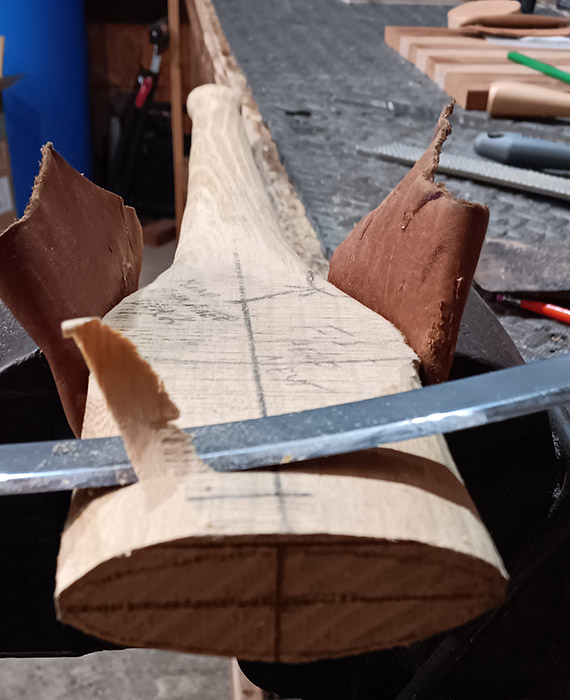
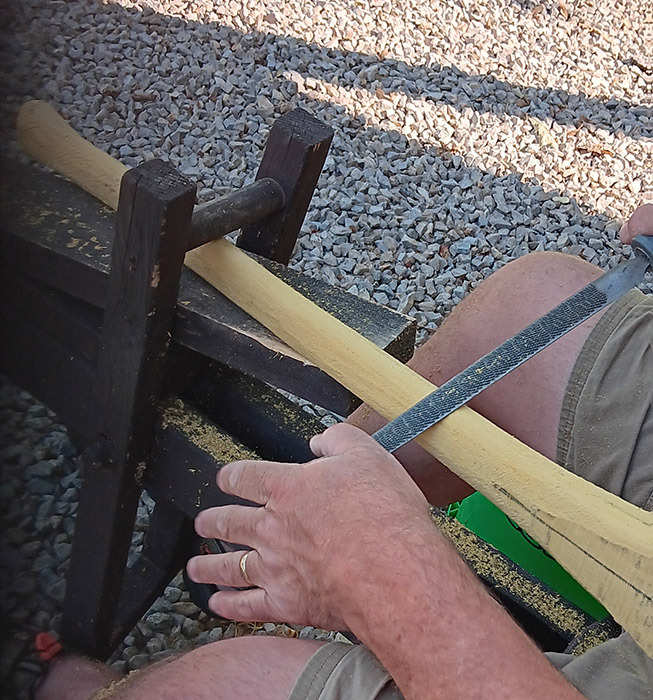
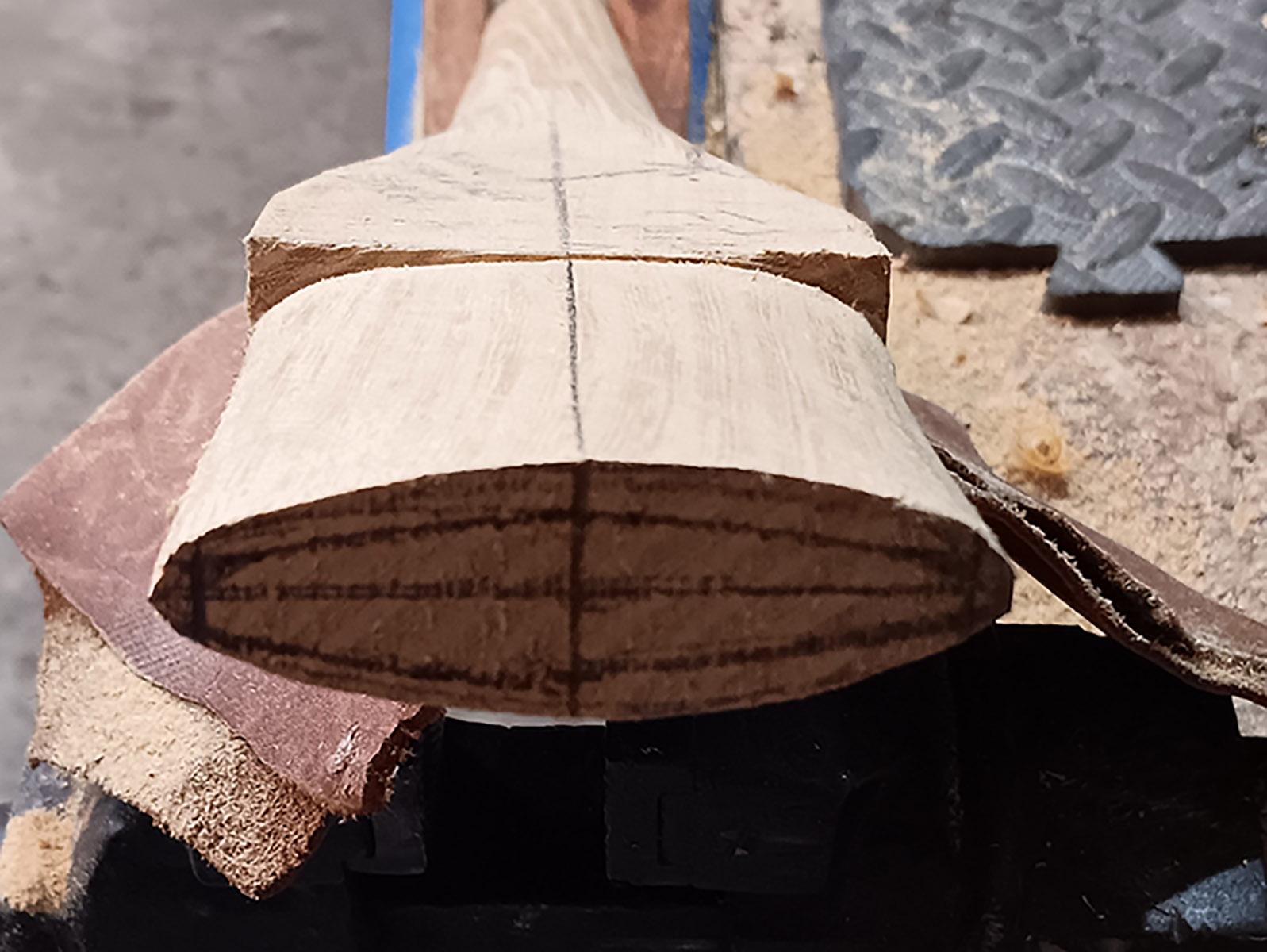
Begin by placing your handle in the vise (wrap leather around the handle to prevent damage) and seat the tool head eye onto the handle. A purchased handle will have a saw kerf (a cut the width of the saw blade) in the center of the top of the handle. If making your own, you’ll have to put this kerf in yourself. A small pull saw works well.
Most store-bought handles come with a wooden wedge. You’ll also need metal wedges (I prefer barrel wedges). Wooden and metal wedges are necessary to take out any play in the handle and tighten it. Place the wooden wedge in the center of the handle kerf, and strike firmly onto the tool head with a rubber or wooden mallet until the head is snug. Always use a rubber hammer or wooden mallet to strike down on the tool head to prevent damage.
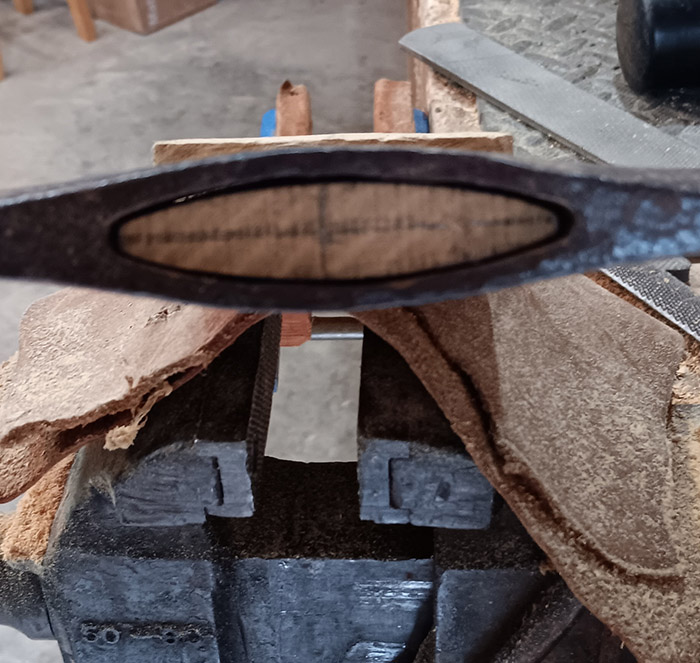
Allow it to set for a day, then use a small saw to trim the wedge off to your desired height. Insert the metal wedge into the center of the eye, and hammer until flush snug. Take care not to split the handle by hammering it in too far. If any excess metal wedge is left, you can file it flush with a metal file.
Finishing the Handle
Now you can finish your handle. A handle from the store is generally coated with a hard polyurethane-type coating, which I don’t care for. I strip this off, sand it, and use a hand-rubbed oil finish. I also use this finish on my handmade handles. There are many different choices, but my favorites are boiled linseed oil, teak oil, or tung oil. A good rule of thumb is to apply one coat a day for a week, one coat a week for a month, once a month for a year, and once a year for the rest of the handle’s life.
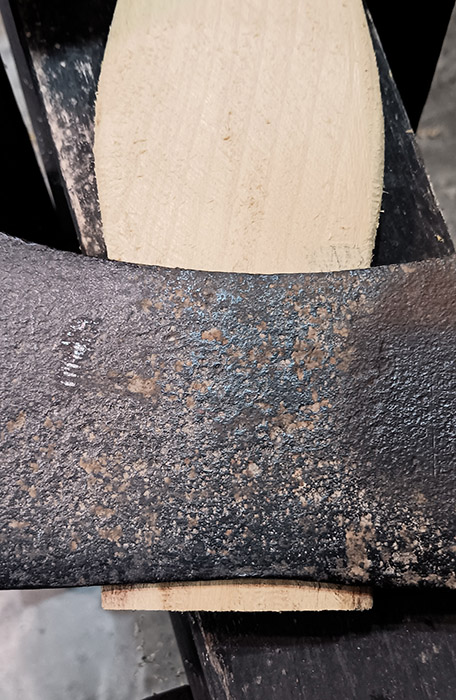
Using this process will ensure you have a good quality handle that should last many years and be comfortable to use. Remember to take care of your tool handles and don’t allow them to be stored outside or use them to beat on objects.
Adding leather collars to items such as axes will prolong their life and keep them from getting nicks and damage to the handle from misplaced chops. So, the next time you see an old tool with a spent handle, don’t hesitate to clean it up and get it back into service with a new handle you install yourself. It’s a great way to save money and a great skill set to learn and pass along.
Jenny Underwood is a homeschooling mama to four lively blessings. She makes her home in the rural foothills of the Ozark Mountains with her husband of 20 years. You can find her reading a good book, drinking coffee, and gardening on their little fifth-generation homestead. Keep up on her blog here.
Originally published in the July/August 2025 issue of Countryside and Small Stock Journal and regularly vetted for accuracy.