Growing Fodder for Pigs
Reading Time: 7 minutes
For those who don’t know what fodder is, it’s a sprouted grain feed. Grain seeds are started by soaking them for 7 to 24 hours before putting them on trays. Many variables affect the soak time, such as the time of year, moisture in the air both outside as well as inside where the fodder unit is kept, the temperature of stored seeds, the type of fodder unit you are using, where your fodder unit is housed, the temperature where the fodder unit is running, as well as the temperature where the seeds are soaked. These variables will determine the length of time you need to soak your seeds which will get you the best germination rate and overall growth when growing fodder for pigs.
How to keep mold and fungus out of your fodder for pigs.
We always add 1 teaspoon of bleach into our soaking seeds to help effectively kill mold and fungal spores. Bleach kills these spores without affecting the germination rate of the seeds themselves. Food-grade peroxide can be used instead of bleach, but it’s much harder for most people to obtain. We have also tried, unsuccessfully, not to use anything except water to soak the seeds but have found a much higher mold growth rate in our fodder as it matures.
Once the seeds are done soaking, they’ll be drained, and the small amount of residual bleach will evaporate. No bleach is left on the finished fodder for pigs. We’ve found that leaving our grain seeds to dry in a wheelbarrow overnight improves the germination rate, and the dried seeds are much easier to spread in the fodder unit. The wheelbarrow has some small holes drilled into the bottom so the remainder of the water drains away and the seeds can effectively dry.
Types of fodder systems
There are many different types of fodder units, and most of them are extremely efficient if used properly. If you want to grow fodder for pigs, you just need to find the correct size system for the animals you plan to feed that will also fit into the location you have available for the fodder unit.
Temperature is an important consideration with fodder systems
One very important fact to point out here is the temperature of your building where the fodder unit is housed. You’ll find that there is a very large difference in growth rate as well as germination rate over a small fluctuation in temperature. We keep our unit at 70 degrees Fahrenheit, and at the end of our six days, we have fodder that is 6 to 8 inches tall. If our heat drops to just 68 degrees F, we have a remarkable drop in the growth rate and have found our barley only grows to about 4 inches tall.
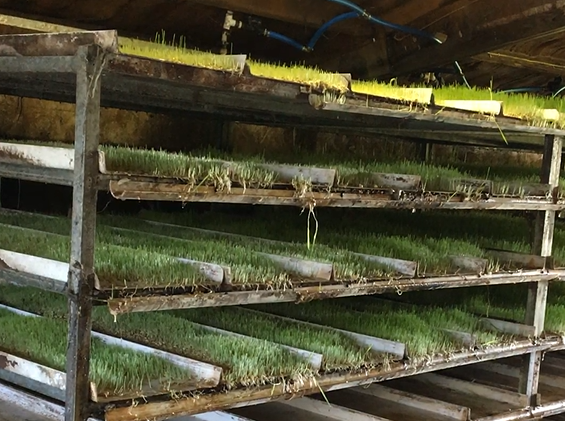
The other notable difference with a decrease in temperature is that the germination rate will decrease. That means that not only will the fodder not grow as tall, but fewer seeds will sprout and grow. In opposition to this, we’ve tried growing the fodder for pigs at an increased temperature and have noted a rather large rise in the amount of mold that forms. The growth rate stayed about the same, but the mold formed was very undesirable, and we weren’t able to feed the fodder to our pigs at all.
A well-regulated temperature will greatly improve your fodder growth rate and germination rate as well as decrease the amount of mold produced.
Humidity will affect fodder for pigs
Another important fact to consider is the humidity. Humidity is extremely important to regulate. The less humidity you have, the better your fodder will grow, and the less mold will be formed. When the air is filled with humidity outside of the fodder area, you’ll note it’s more difficult to regulate the humidity inside as well. Because of the increase of mold produced when the humidity is too high, it’s better for the fodder as well as the animals to be able to keep the humidity at a low level!
Once we pull the fodder off the trays to feed it, the trays are cleaned with bleach water in preparation for the next seeds that will be spread. The bleach water helps to kill any mold or fungal spores beginning to develop and thoroughly cleans the trays.
What seeds should you use in your fodder system?
Choosing which seeds you want to utilize in your fodder unit is one of the most important decisions you will make regarding the fodder you grow. Not all grain seeds behave the same in a fodder unit. Barley is the most common grain used because it sprouts well, has a good germination rate and growth rate, and doesn’t grow mold as easily as other grains. Barley seeds also develop a very thick root mat that provides additional forage for the pigs to eat.
The only real downside to using barley when growing fodder for pigs is that the grass has a bitter taste as compared to wheat, peas, or oats. Wheat seeds, as a whole, won’t germinate as well as barley will but do a fairly decent job. Oat seeds are some of the most difficult seeds to get to germinate and are prone to mold very quickly.
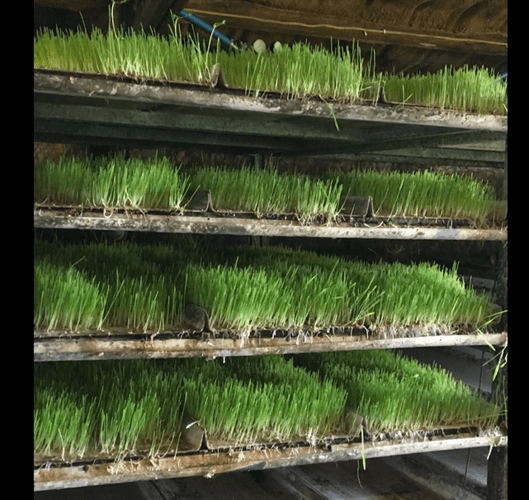
We use barley seeds because we’ve found that the germination rate, ease of sprouting, and growth rate work the best in our fodder unit. There are, of course, many different kinds of barley seeds, and after years of trial and error, we have a few brands that we recommend because they grow very well in our fodder unit, as well as a few brands we highly don’t recommend and we feel should be avoided. Both Celebration and Robust seed varieties sprout extremely well even with a fluctuation of outside temperatures, and both have a good growth rate. Rasmussen, Kewaunee, and Hazen aren’t recommended for a fodder unit.
Regardless of the brand you use in your fodder unit, you need to make sure you purchase seeds that are cleaned before purchase. Dirty seeds won’t germinate properly and will produce a large amount of mold.
Another type of seed you can use is the field pea seed. Pea seeds can be sprouted by themselves or with other grains. Pea seeds don’t grow as quickly as barley or wheat and don’t develop a good root mat that aids in the ease of feeding. For this reason, pea seeds are recommended as a complimentary seed in conjunction with barley. The sweet flavor of the pea sprouts offsets the bitter flavor of the barley and decreases mold production.
Why grow fodder for pigs?
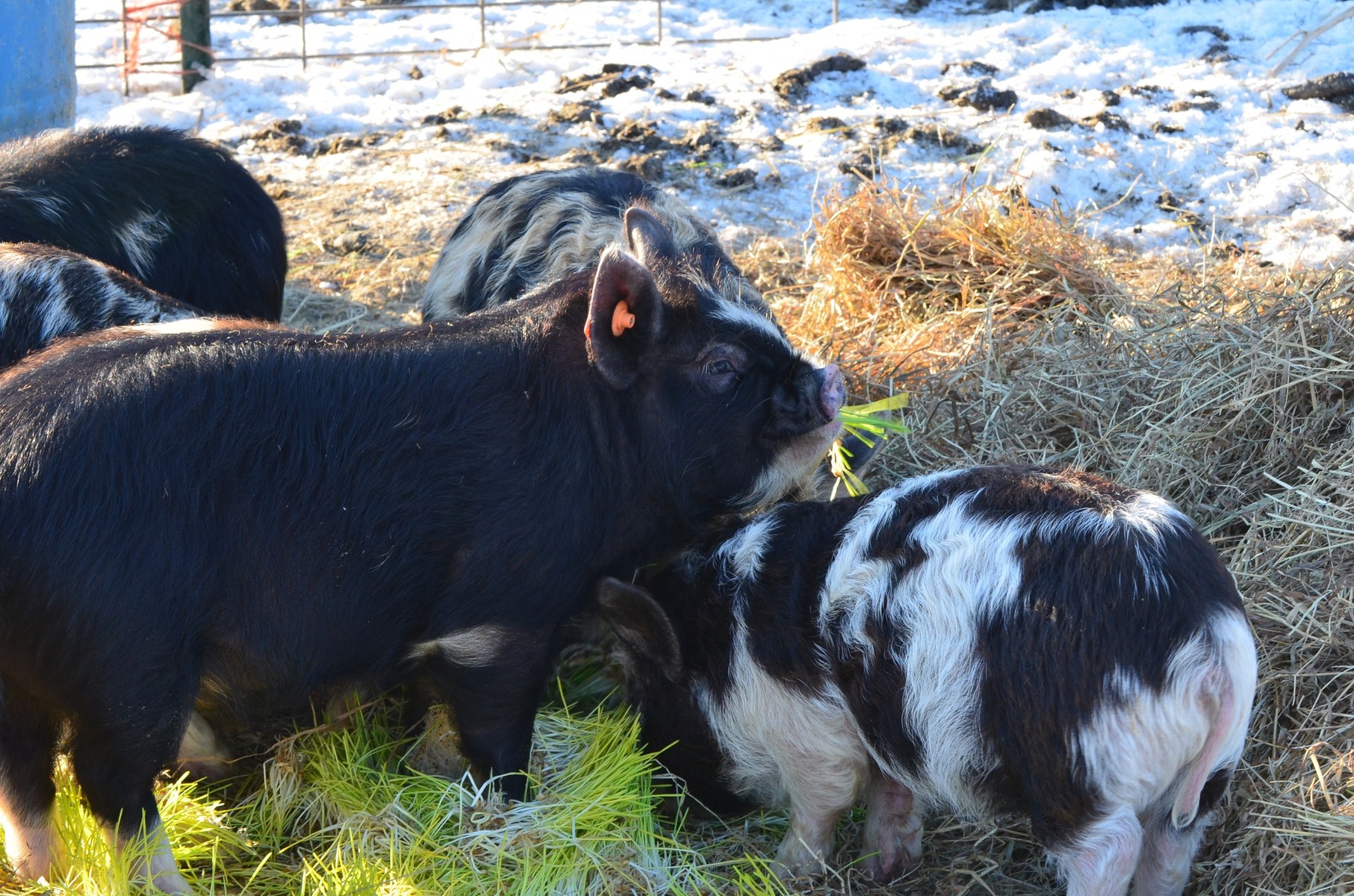
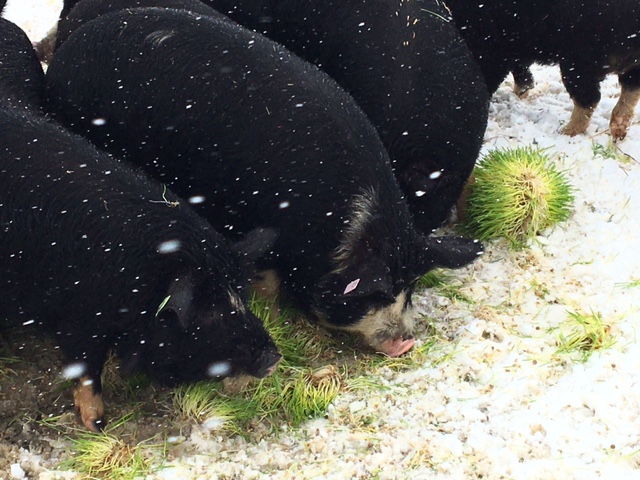
Our pigs absolutely love their fodder and eat it all with gusto and sheer happiness. Many times, when I throw the fodder into the pigs each evening at suppertime, one or more of them will grab up their section and run off with it to a far part of the pasture so they can eat it without sharing. Our farm produces about 750 pounds of fodder each day, and we feed about 7 to 10 pounds of fodder each evening per adult pig. You probably won’t be feeding about 300 pigs daily with fodder, so the amount of seeds you use will be less based on the quantity and ages of the pigs you wish to feed.
We routinely have people ask us why we would take all of the time and energy to grow fodder. There are several reasons, with the most important to us being that it provides a high-protein diet to the pigs while allowing them to continue to be primarily grass-fed. Having pigs that are primarily grass-fed will provide you with higher-quality meat with a much better texture and taste.
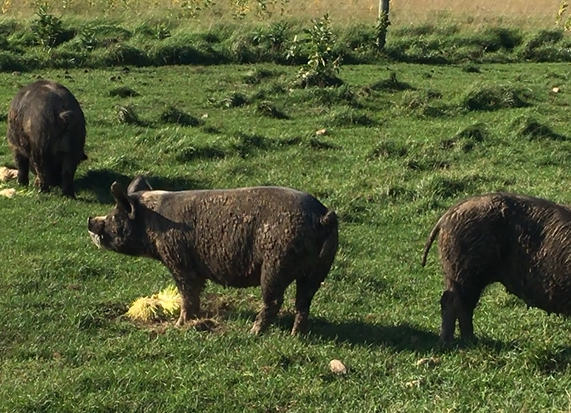
There are many benefits to feeding fodder to your pigs, including improved gut function and improved behavior and temperament (although if you have good-quality pigs, this won’t be a concern, and if you don’t, then I recommend you butcher those pigs and replace them with a better group of pigs). Faster weight gain is also noted because of the ease of digestibility you have with fodder as compared to commercial feeds. The nutrient level is much higher in both the essential nutrients as well as the amino acids.
Green grass is filled with chlorophyll. As the body digests chlorophyll, it helps with the rebuilding of the red blood cells, which will increase nutrient delivery and oxygenation of the cells. This helps you understand why grass-fed pigs (and other grass-based animals) have such dark red meat as compared to commercially raised pigs. Chlorophyll is also high in antioxidant vitamins (vitamins A, C, and E) that have been known to reduce inflammation as well as prevent damage to cell tissues.
At butcher time, you not only have a pig that costs much less to raise, but also have meat that’s nutrient-dense and absolutely delicious. Raising our pigs on 90% grass means that the meat quality is phenomenal. The dark red meat is well marbled and extremely juicy and tender. The meat is higher in essential amino acids and nutrients, and the taste is sweet and has a robust flavor.
Jodi Cronauer lives in Wisconsin with her husband and her three sons. They raise Idaho Pasture pigs, Kunekune pigs, and American bison as well as Gypsy Vanner horses. The meat from their pigs and bison is rich in essential nutrients because they eat grass as their primary diet. Jodi is the author of Raising Pigs on Green Pastures (Dorrance Publishing, 2021). shop. iamcountryside.com/products/ raising-pigs-on-green-pastures.
Originally published in the September/October 2023 issue of Countryside and Small Stock Journal and regularly vetted for accuracy.