Murray Grey Cattle
A great breed for a small farm.
Reading Time: 8 minutes
Learn about Murray Grey cattle, one of the most popular Australian beef cattle breeds. Their temperament and gentle nature make them perfect for small farms.
by Heather Smith Thomas
Legend has it that in the early 1900s, this unique breed originated in Australia from a single-roan Shorthorn cow. She was Eva Sutherland’s pet cow, and her husband, Peter, raised Aberdeen Angus. The Shorthorn cow was bred to several different Angus bulls over the years, with the first calf born in 1905. That calf was grey, as were all her other calves, no matter which Angus bull she was bred to; all 12 of her offspring were grey. Eva liked these grey calves, so her husband didn’t slaughter them, even though he feared they would reflect poorly on his Black Angus herd. The grey heifers were bred to Angus bulls, and their offspring were various shades of grey.
When her husband died in 1929, Eva sold the herd of Greys to her cousin, Helen Sutherland, who started a systematic breeding program for these unique cattle. Local cattlemen became interested because of their desirable size, appearance, superior feed conversion, and carcass merit. By 1962, more than 50 breeders had formed the Murray Grey Beef Cattle Society of Australia.
Murray Grey semen was first brought to the U.S. in 1969. In 1972, the first live animals arrived after importation was allowed, but the expansion of the breed in the U.S. was mainly through imported semen and embryos. Today, Murray Greys are the second largest beef breed in Australia (Angus are the most common), and even though there aren’t very many Murray Greys in the U.S. yet, this is one of the fastest growing beef breeds, as more people learn about them.
Murray Grey Cattle Characteristics
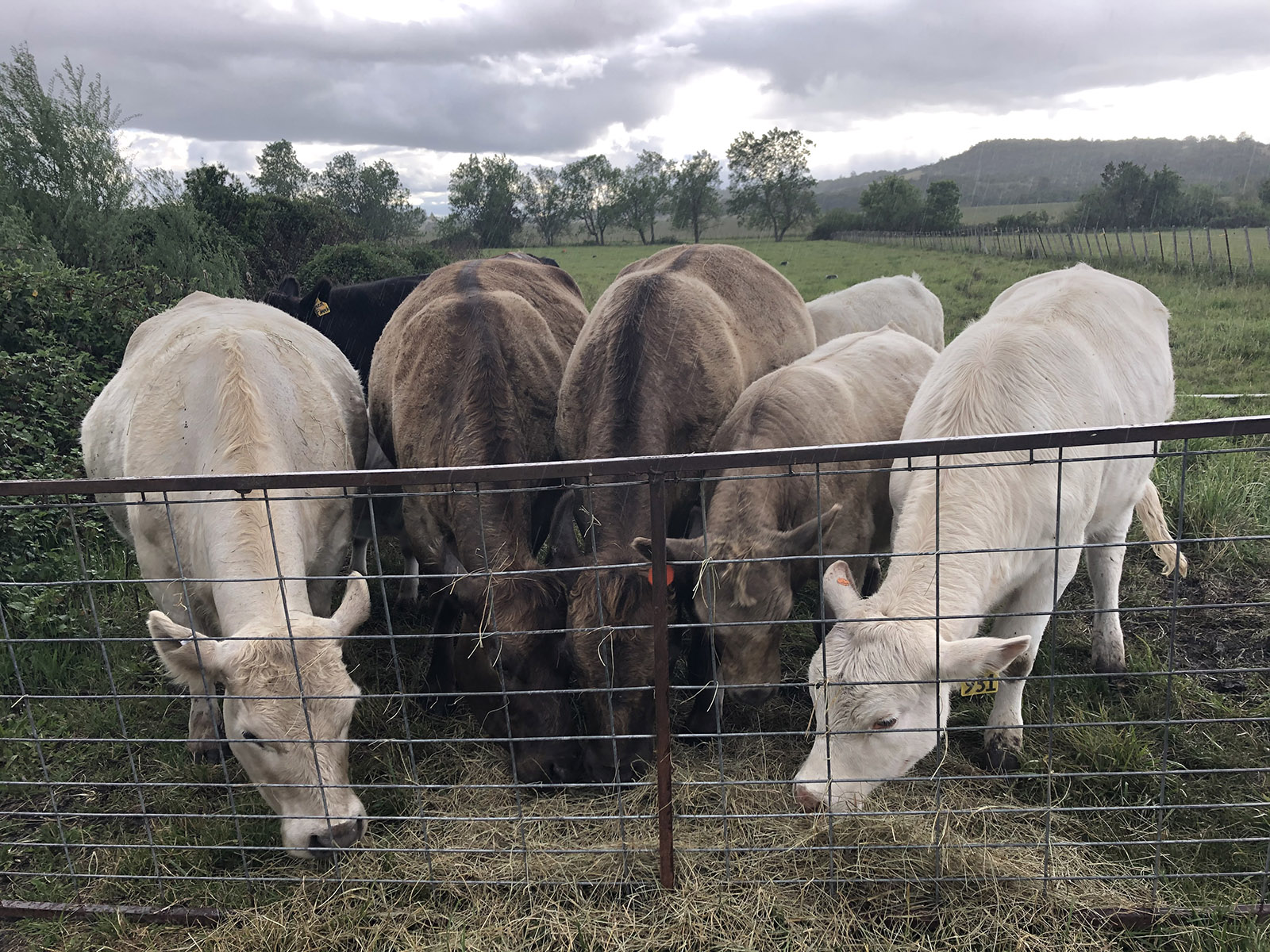
Varying in shades of gray, from silver to brown to black, these cattle are always a solid color and naturally polled. If bred to horned cattle, offspring are usually polled. From their Angus ancestors, they inherit dark skin pigment and aren’t susceptible to skin or eye problems. They’re hardy and adaptable in most climates and terrains.
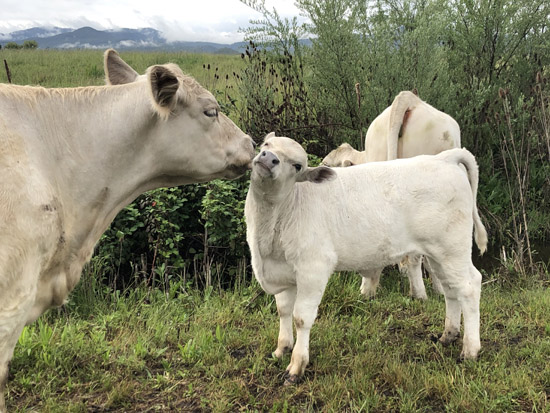
Murray Grey calves are small at birth, typically between 60 and 80 pounds, and easily born. A typical Murray Grey cow weans off a calf (at 6 to 7 months old) that is at least 50 percent of her own body weight. The cows are excellent mothers with good udders that don’t break down. Bulls and cows are noted for early maturity and high fertility. Bulls have large scrotal circumference and the ability to cover many cows. Cows rebreed quickly after calving and it’s common for them to stay in a herd for 15 years or more, producing a good calf every year.
Murray Grey Beef Grades
Their gentle nature makes Murray Greys a favorite for cow/calf producers and feedlots (calm cattle make better beef), and a good choice for first-time farmers. They’re quiet and easily handled, with less stress. They have the genetics to produce tender, tasty, marbled beef on grass or grain without excess fat. Steers finish in less time and on less feed than most other beef breeds. They have exceptional dressing percentages and high yields. A study in the U.S. showed that Murray Grey steers have a 12 percent larger rib eye area than the average U.S. beef steer and are twice as likely to grade Choice or Prime. In Australia and other countries around the world, Murray Greys have dominated the high placings in most carcass contests. Mature animals eat 1/3 less food than most breeds while still maintaining good body condition.
Mature bulls weigh about 2,000 pounds. Mature cows weigh from 1,100 to 1,350 pounds. When ready for slaughter, a typical steer weighs about 1,150 to 1,300 pounds. As beef animals, they finish several weeks earlier than most other breeds and on less feed per day. This means less cost and more profit.
Farmers and ranchers in the U.S. who’ve discovered this breed are happy with these cattle and believe they’re the best beef breed. For instance, Whitney Byrd grew up on a farm in Oregon where her family had Limousin cattle, and recently discovered Murray Greys. “I liked the Limousin growth and lighter hide and coat color (more heat tolerance) but didn’t like their challenging temperament,” she says.
“We phased out the Limousins and got a few commercial cattle — Red Angus, Black Angus, and some Hereford crosses. In my youth, I did 4-H and livestock judging and gained a good eye for phenotype and some things I didn’t want to see in a steer or heifer,” says Byrd.
“My whole experience, growing up, was learning what I didn’t want in cattle, and I developed a critical eye for what I did want. After college, my husband and I purchased a few Charolais and Herefords because that was what was available.”
Temperament
One year, their cows all had heifers. “We wanted to trade for a couple of steers to finish for beef and found a rancher who told us he wouldn’t mind getting some heifers in exchange for steers. We went to his place, and he had a gorgeous dark grey yearling bull. I really liked that bull and tried to convince him to sell it. We turned away from the pasture to talk, and my 3-year-old son slipped through the fence and went right up to that bull!”
The next thing she knew, the bull was making a low growling sound. “We turned around, and my son had the bull by the ears, and the bull had his head right against my son’s chest. I freaked out, jumped the fence, and ran over there, and the bull was licking my son! I’d never seen a cow or a bull that gentle. The guy said, ‘This is my big Labrador, which is why I won’t sell him.’ That bull was my first experience with a Murray Grey. He was a very thick, good-looking bull and dog gentle — and completely enamored with little children,” she says.
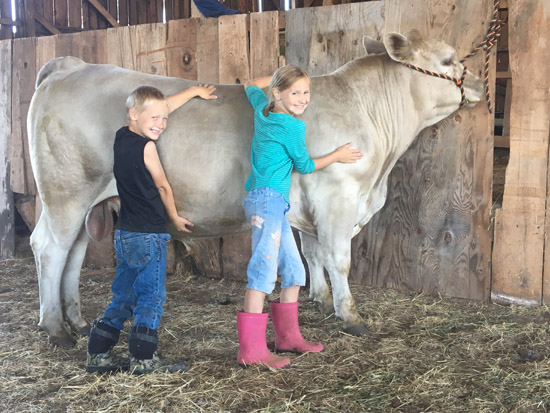
“We leased that bull and bred him to our commercial cows for a couple of years until we could buy our first Murray Grey pair. We were hooked! Once we got that cow home, there was a night and day difference in her temperament compared to every other cow we had. We started looking around and bought more Murray Grey cows,” says Byrd.
“We have 50 acres of irrigated land near Eagle Point. My husband, two kids, and I manage this place and put up a little hay. It’s the right size to be manageable but not so big that we have to hire help.”
Grass-Raising Murray Grey Cattle
There are many reasons she likes the Murray Grey. “Many people are health conscious today, selecting grass-fed beef, and these animals do well on grass. They grow a little slower on grass than on grain, but they grow and finish at a similar weight. We still have a few Charolais, and they grow all their frame first and then put on weight and finish.” They won’t finish until they have all that growth. By contrast, a Murray Grey can be harvested any time and still have a great carcass — just smaller.
“Doing grass-fed genetics and some farm-to-table beef works well for us. We’re still growing our Murray Grey herd and recently worked with some Australian breeders to purchase semen and embryos. There are many Murray Grey cattle in Australia, with a large gene pool, whereas in this country, we’re still limited because numbers are low. We imported genetics from Australia to infuse some outside genetics into our herd.”
These cattle manage heat better than Black Angus. “My daughter has some Black Angus in our herd, and they’ll lie in the shade while the Murray Greys are out grazing and putting on pounds.”
Comparing Beef Breeds
The Murray Grey is an ideal breed for those getting started with cattle because they’re more docile and user-friendly than most other cattle. “They’ve been called the ‘Gentle Builders of Beef.’ Their gentle disposition makes them easier to manage when you’re still learning about cattle. There’s a lot of interest in buying gentle bulls to use on the herd you already have. Calving ease and disposition are huge benefits. You get a more uniform calf crop and also the hybrid vigor if your cows are some other breed,” she says.
Jerry Rigby purchased his family’s ranch near Vernon — a small town on the edge of the west desert in northwestern Utah. “I tried several different things to make a little money from the place; I tried putting up hay and raising Holstein bottle calves, then began looking at cattle breeds,” he says.
“Angus turned me off because of their temperament. I worked for Union Pacific Railroad and was in Montana eating breakfast at a little café, talking with a rancher who had gone to the Midland bull sale and bought some Murray Grey bulls. He went there to buy Angus bulls, but when the Murray Greys came through the sale, they were a lot cheaper, and he bought several of them. He put them with his heifers, and the next year, the heifers calved easily, and those calves grew bigger than his other calves. He told me he was going back to buy more Murray Grey bulls and do some crossbreeding with them and add these genetics to his herd.”
That was the first time Rigby heard about this breed. “My wife and I started calling around to find some, and my wife bought some heifers for me for my birthday. She found someone in Idaho who raised Murray Greys, and we bought a heifer and a couple of cows. Then we went to California and bought a bull and started our herd.”
He met Justin and MaryAnn Holloway in Idaho and bought some bulls and heifers from them. “Now I have 20 head. I don’t like to buy hay, and my 40 acres will sustain this small herd.” They’re very efficient cattle.
“Ranchers who’ve seen my cattle have asked why my cows are always fat since I don’t feed them very much. I’ve done some research on them, and in Australia, they don’t get corn or grain. These cattle simply graze grass. When they come over here and you put them on alfalfa, they stay fat!”
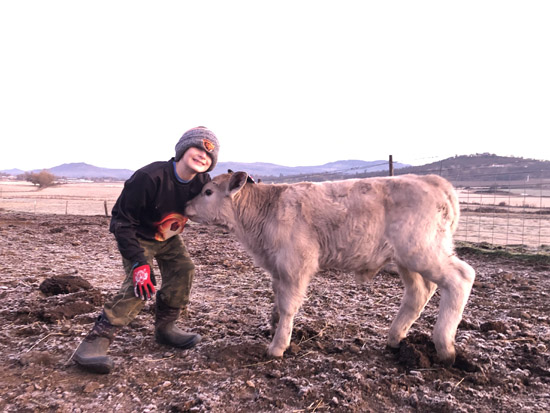
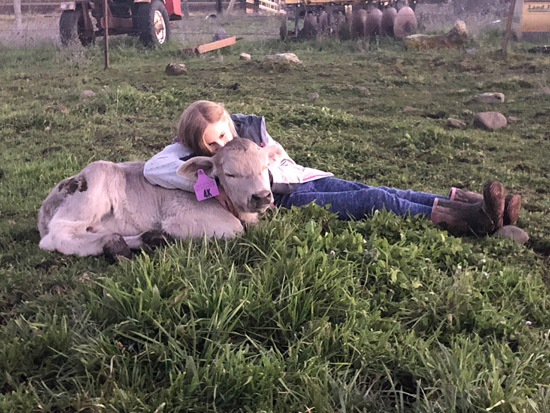
When he was raising Murray Grey show steers for his kids, he didn’t have to feed any grain until about two months before the show; they didn’t need it. “These are good, efficient cattle, and I love them for their docile attitude. One year, I had an old cow that had a sick calf, and I put that pair in a pen in the barn. The calf was reluctant to nurse, but the cow was so docile that I could get hold of a teat and put it in the calf’s mouth. She was a range cow, not a pet, but she let me do that!”
His cows are currently on a 1,500-acre ranch. “I hadn’t seen them for a while, but my cousin had cattle there, too, and pulled them out recently to sell his calves, and he told me my cows were really fat,” says Rigby.
“A guy with a feedlot at Tremonton (Utah) had 20 Murray Grey cattle in a separate pen from the others. He said those were the most efficient cattle he’d ever put through a feedlot. They finished three or four months ahead of the others.” This makes them much cheaper to feed and finish.
“I don’t have anything negative to say about this breed! They’re ideal for people who are just getting started with cattle and don’t know much about cows; they’re docile and forgiving, and a person can run a few more on a small acreage than other breeds. You don’t need irrigated pasture,” says Rigby.
Heather Smith Thomas ranches with her husband near Salmon, Idaho, raising cattle and a few horses. She has a B.A. in English and history. She has raised and trained horses for 50 years and has been writing freelance articles and books nearly that long, publishing 20 books and more than 9,000 articles for horse and livestock publications. Find Heather online at HeatherSmithThomas.BlogSpot.com.
Originally published in the May/June 2025 issue of Countryside and Small Stock Journal and regularly vetted for accuracy.